Find a Medicare Part D prescription drug plan

Medicare Part D
Prescription Drug Coverage 2026
Is Ozempic Covered by Medicare Part D?
If you’re wondering if Ozempic is covered by Medicare Part D, the short answer is yes, for type 2 diabetes management. However, coverage specifics will likely depend on your Part D plan.
This article will explain the details, including possible costs and how to ensure your plan covers Ozempic.
Key Takeaways
- Ozempic, primarily for type 2 diabetes management, may be covered under Medicare Part D when prescribed for this purpose, but not for weight loss.
- Possible costs for Ozempic under Medicare Part D may vary significantly by plan, likely emphasizing the need for beneficiaries to check their specific plan’s formulary and pricing structure.
- Various legislative efforts may impact Medicare coverage for weight loss medications, likely highlighting the importance of staying informed about policy changes.
What is Ozempic?

Ozempic is a well-known brand for semaglutide, an injectable medication primarily used for managing type 2 diabetes. It is FDA-approved specifically for this purpose and helps individuals control their blood sugar levels effectively.
Ozempic works by mimicking the effects of a natural hormone that regulates blood sugar and insulin levels in the body, likely making it a crucial medication for many diabetes patients.
Apart from its primary use in diabetes management, Ozempic has also gained popularity as an aid in weight loss. Although it is not FDA-approved for weight loss, many users have reported significant weight reduction. This off-label use likely highlights Ozempic’s versatility but also underscores the importance of understanding its approved indications and insurance coverage specifics.
It’s important to note that no generic alternatives for Ozempic are currently available, and it will likely remain that way. This exclusivity might impact the cost and accessibility of the medication, possibly making it even more critical to understand how Medicare might cover it.
Medicare Part D Coverage for Ozempic
Medicare Part D may provide coverage for Ozempic. However, this coverage is only prescribed for type 2 diabetes treatment. However, coverage may vary significantly depending on the specific Medicare Part D plan you are enrolled in.
Each plan has its own formulary, which is a list of covered prescription drugs, and it’s essential to check if Ozempic might be included in your plan’s formulary.
Medicare Part D might not cover medications prescribed solely for weight loss, which may include Ozempic when used for this purpose. This means that while Ozempic may be covered for diabetes management, if your doctor prescribes it strictly for weight loss, you might have to bear the full cost out-of-pocket.
To ensure coverage for Ozempic under your Medicare Part D plan, follow these steps:
- Verify with your Medicare Part D plan if Ozempic is listed in their formulary.
- Understand that this step will likely be essential to help avoid unexpected costs and ensure access to the medication you need.
- Keep in mind that Medicare Part D plans may vary, so stay informed about your specific plan’s coverage.
Understanding Medicare Part D Prescription Drug Plans
Medicare Part D provides prescription drug coverage for beneficiaries, likely helping them afford necessary medications. Based on data from recent years, about 44% of Medicare beneficiaries were enrolled in stand-alone Medicare prescription drug plans, reflecting the program’s importance and widespread use.
Understanding how these plans work could be key to making informed decisions about your health care.
Enrollment in Medicare Part D can occur during several periods: the Initial Enrollment Period, the Annual Enrollment Period, and the Special Enrollment Period. These enrollment windows provide opportunities to join or switch plans, ensuring that beneficiaries can find the coverage that best meets their needs.
During the initial coverage phase of Medicare Part D, enrollees may be responsible for a coinsurance of about 25% for covered drugs, while plan sponsors might cover up to 65%, and CMS may provide a subsidy of about 10%.
The annual out-of-pocket spending limit for Medicare Part D may be set at around $2,100, possibly offering additional financial protection for beneficiaries. Knowing these cost-sharing responsibilities and possible limits could help you better plan for your medication expenses.
Potential Cost of Ozempic with Medicare Part D
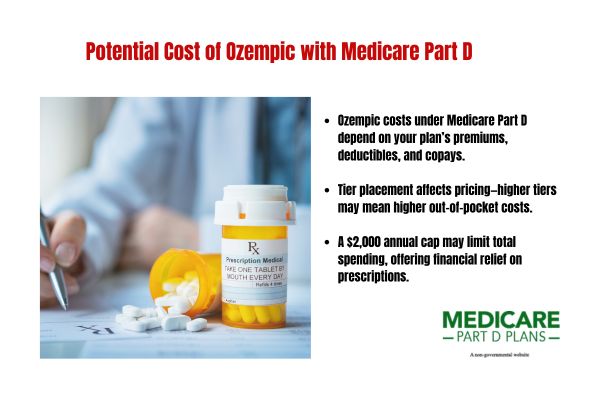
The cost of Ozempic under Medicare Part D will likely be influenced by several factors, such as premiums, deductibles, and co-payments. Each Medicare Part D plan has its own pricing structure, and it’s essential to understand how these elements could affect your out-of-pocket costs.
The copayment for Ozempic might vary depending on its formulary placement and the tier level chosen by your Medicare Part D plan. Some plans might place Ozempic in a higher tier, possibly resulting in higher co-payments, while others might offer more affordable options. Confirm whether your plan’s deductible applies to Ozempic, as this could impact the overall cost.
The out-of-pocket spending cap for Medicare Part D may be set around $2,000 annually. This may be part of the ongoing adjustments to the program and could potentially provide significant financial relief by limiting the amount you may have to spend on medications each year.
Regularly reviewing your plan’s formulary and cost structure could help ensure you’re getting the best possible coverage for Ozempic.
Alternatives to Ozempic for Weight Loss
While Ozempic is effective for managing blood sugar levels, there may be other medications specifically approved for weight loss. Wegovy and Zepbound will likely be two such FDA-approved medications that could help manage blood sugar levels and weight management.
These alternatives could be particularly beneficial for individuals who are overweight and have at least one weight-related health condition.
Wegovy received FDA approval for weight management and targets individuals struggling with obesity or weight-related health issues. Zepbound may also serve as an effective weight loss medication, but may require specific coverage considerations, so be sure to check with your insurance provider.
While Ozempic is primarily for blood sugar management, these possible alternatives may be specifically designed for weight loss. Consult your healthcare provider to determine the best medication for your needs and ensure appropriate coverage.
Prior Authorization and Documentation Requirements
Some Medicare Part D plans may require prior authorization for certain medications, including Ozempic. This process will likely involve your healthcare provider submitting documentation to justify the medical necessity of the medication.
For Ozempic, prior authorization may be required to confirm its use for managing type 2 diabetes, ensuring that it meets Medicare’s coverage criteria.
After obtaining prior authorization, your Medicare Part D plan will likely give you an estimated cost for your next prescription fill before you go to the pharmacy. This could help you anticipate your out-of-pocket expenses and plan accordingly.
Ensure your healthcare provider submits all necessary documentation to avoid delays in receiving your medication.
Financial Assistance Programs
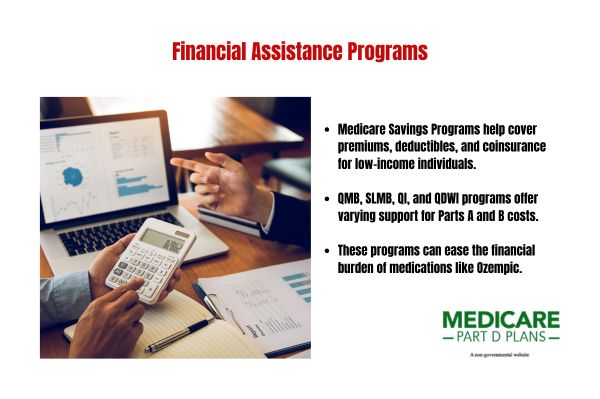
Several financial assistance programs will likely be available for individuals struggling with the costs associated with Ozempic and other medications. Medicare Savings Programs, for instance, will likely be designed to help low-income individuals cover their Medicare premiums, deductibles, and coinsurance.
These programs could offer significant financial relief and possibly make essential medications more accessible.
The Qualified Medicare Beneficiary (QMB) Program may cover both Part A and Part B premiums, deductibles, and copayments for eligible individuals. Similarly, the Specified Low-Income Medicare Beneficiary (SLMB) Program may assist with Part B premiums. These programs could potentially reduce the overall cost burden of healthcare for those who qualify.
Other programs, such as the Qualifying Individual (QI) Program and the Qualified Disabled & Working Individual (QDWI) Program, could offer additional support.
The QI Program may help to pay for Part B premiums but might require annual reapplication, while the QDWI Program could assist with Part A premiums for those who have returned to work after a disability. Explore these options to find the financial assistance you need to manage your healthcare costs.
See plans in your area instantly!
Advertisement
Shopping for Medicare Part D Plans
Choosing the right Medicare Part D plan might be overwhelming, but it’s crucial to regularly compare options to ensure you have the best coverage. Consider the following:
- The open enrollment period runs from October 15 to December 7, providing an opportunity to review and switch plans if needed.
- Use resources like the Plan Finder tool on this website to identify plans that cover your preferred pharmacies and medications.
When shopping for a plan, members should consider the possible:
- Premiums
- Deductibles
- Copayments
- Formulary inclusions
Plans may vary significantly in these aspects, so taking the time to compare could lead to substantial savings and better coverage. Check for any changes in your current plan’s formulary to help avoid unexpected costs and possibly ensure continued access to necessary medications and risk.
Protecting Yourself from Medicare Fraud
Medicare fraud is a serious issue, and protecting yourself is essential. To safeguard your Medicare information:
- Keep your Medicare card secure, treating it with the same care as your Social Security card or credit card.
- Never disclose your Medicare number to strangers.
- Only provide your Medicare number to authorized healthcare providers.
Be wary of offers for free medical services or products in exchange for your Medicare information. Legitimate Medicare representatives do not conduct home visits, so avoid engaging with door-to-door salespeople offering medical supplies.
Regularly reviewing your Medicare statements may also help you identify any discrepancies and ensure that the services listed match what you received.
By staying vigilant and informed, you can protect yourself from fraud and ensure that your Medicare benefits are used appropriately.
Find a Plan and Enroll Online Yourself!
Advertisement
Summary
Understanding the coverage of Ozempic under Medicare Part D will likely involve navigating various factors, from formulary inclusions to prior authorization requirements.
While Ozempic may be covered for type 2 diabetes management, its use for weight loss might not be included under Medicare Part D. Exploring possible alternatives like Wegovy and Zepbound, along with financial assistance programs, could help manage costs and access necessary medications.
Staying informed about potential updates and comparing Medicare Part D plans may further ensure that you have the best possible coverage for your needs. By taking proactive steps and staying vigilant against fraud, you can make the most of your Medicare benefits and maintain your health effectively.
Frequently Asked Questions
Is Ozempic covered by Medicare Part D for weight loss?
Ozempic may not be covered by Medicare Part D if it is prescribed only for weight loss. Coverage will likely require a medical necessity related to conditions such as type 2 diabetes.
What are the potential alternatives to Ozempic for weight loss?
Wegovy and Zepbound could be effective FDA-approved alternatives to Ozempic for weight loss. These medications could help you reach your weight loss goals safely under medical guidance.
What is the out-of-pocket spending cap for Medicare Part D?
The out-of-pocket spending cap for Medicare Part D may be set around $2,000 annually. This cap could potentially provide financial protection for beneficiaries.
What should I do to protect myself from Medicare fraud?
To protect yourself from Medicare fraud, keep your Medicare card secure, never share your Medicare number with strangers, and regularly review your Medicare statements for discrepancies. Taking these proactive steps can help safeguard your personal information.
Begin Choosing your plan
Advertisement
ZRN Health & Financial Services, LLC, a Texas limited liability company.