Find a Medicare Part D prescription drug plan


Medicare Part D
Prescription Drug Coverage 2026
Medicare Part D Penalty
If you delay enrolling in a Medicare Prescription Drug Plan, you may face the Medicare Part D penalty. This extra cost, which will likely be added to your monthly premium, could last indefinitely and may significantly boost your healthcare expenses.
Knowing how this penalty works and how to avoid it could save you money. This article will break down what the Medicare Part D penalty is, how it’s calculated, and steps you could take to steer clear of it.
Key Takeaways
- The Medicare Part D late enrollment penalty will likely be a permanent charge that may be added to premiums for those who delay signing up for drug coverage beyond their initial eligibility period.
- To avoid penalties, individuals must enroll in Medicare Part D within three months of becoming eligible or maintain creditable prescription drug coverage without gaps of 63 days or more.
- The penalty will likely be calculated based on the national base beneficiary premium, as monthly costs may depend on the number of uncovered months prior to enrollment.
What is the Medicare Part D Late Enrollment Penalty?

The Medicare Part D late enrollment penalty will likely be a financial charge that may be permanently added to your Medicare drug coverage premium if you fail to sign up for a Medicare drug plan when you are first eligible.
This penalty will likely serve to encourage timely enrollment during the initial eligibility period, possibly ensuring beneficiaries have access to prescription drug coverage when they need it the most. Timely enrollment may help beneficiaries avoid higher costs due to penalties.
When you enroll in a Medicare drug plan, the plan will notify you if you are required to pay a late enrollment penalty. This penalty will likely be a monthly fee that may be added to your premium for as long as you have Medicare Part D.
One thing to keep in mind is that the penalty amount might increase each year, which could have a further impact on your overall costs. Grasping this penalty and its possible implications will likely be key to managing healthcare expenses effectively.
Understanding the purpose and potential impact of the Medicare Part D late enrollment penalty could help you make informed decisions about your prescription drug coverage. Proactive and timely enrollment will likely help to avoid additional costs and ensure necessary coverage.
When Does the Late Enrollment Penalty Apply?
Timing is everything when it comes to avoiding the Medicare Part D late enrollment penalty. For instance:
- Enroll in Medicare Part D within three months of first becoming eligible for Parts A and B to avoid penalties.
- Missing this crucial window could lead to penalties that add up overtime.
- These penalties might make your healthcare expenses significantly higher.
The late enrollment penalty is triggered if there is a gap of 63 or more consecutive days without Medicare drug coverage after your Initial Enrollment Period. This means:
- If you go without creditable prescription drug coverage for this period, you may be subject to the penalty when you eventually enroll in a Medicare drug plan.
- Creditable coverage likely refers to drug plans that are at least as good as Medicare Part D.
- Examples of creditable coverage might include plans provided by employers, unions, or other sources.
Understanding when the late enrollment penalty could apply will likely be essential for anyone nearing Medicare eligibility. By ensuring continuous coverage and avoiding gaps, you could steer clear of these financial penalties.
Whether it’s through enrolling during your Initial Enrollment Period or maintaining creditable prescription drug coverage, staying informed and proactive is key.
How is the Late Enrollment Penalty Calculated?
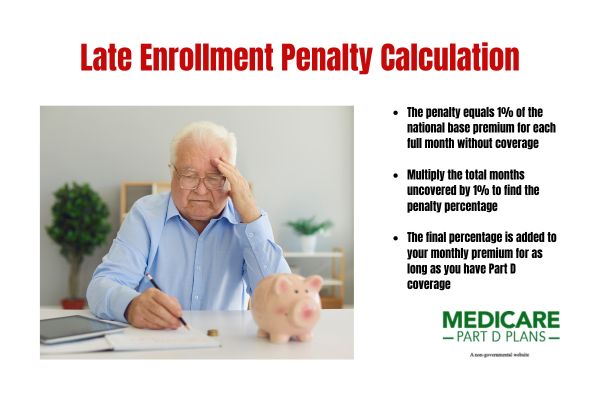
Calculating the Medicare Part D late enrollment penalty might seem complex but breaking it down step-by-step could make it more manageable.
The penalty will likely be determined by the national base beneficiary premium. This premium may be adjusted on an annual basis. Based on data from recent years, this premium may be set around $36.78.
The penalty will likely be determined as follows:
- Multiply 1% of the national base beneficiary premium by the number of full, uncovered months you were eligible but did not enroll in a Medicare drug plan.
- For example, if you delay enrolling for 14 months, the penalty would be 14% of the national base beneficiary premium.
- This percentage is then rounded to the nearest ten cents.
- Finally, the rounded amount may be added to your monthly premium.
This penalty may remain applicable as long as you maintain Medicare drug coverage. Even if you later switch to a Part D plan with a lower premium, the penalty amount is still based on the national base premium, not your plan’s premium.
Examples of Late Enrollment Penalty Calculations
To understand how the penalty may be calculated, consider the following examples. For instance, the calculation for a member with a 31-month gap without creditable drug coverage may involve:
- Calculating about 31% of the national base beneficiary premium.
- Using the base premium of about $36.78 to determine the additional monthly cost.
- Resulting in the additional monthly cost of about $11.40.
- Adding this penalty to their monthly premium for as long as he has Medicare Part D coverage.
Another example would be an individual who delays enrolling for 14 months. Their penalty would be 14% of the approximate $36.78 national base beneficiary premium, which could result in an additional cost of approximately $5.20. This amount, although seemingly small, could add up over time and may have a significant impact on the overall healthcare expenses.
A simpler situation might involve a seven-month delay in enrolling. Here, the penalty would be about 7% of the national base beneficiary premium, likely making their monthly premium increase by around $2.60.
These examples underscore the importance of understanding the implications of delayed enrollment and the potential financial impact it could have.
How to Avoid the Medicare Part D Penalty
Avoiding the Medicare Part D penalty is straightforward if you take timely action. The most effective strategy is to enroll in Medicare Part D during your Initial Enrollment Period. This period starts three months before you turn 65, includes your birthday month, and extends three months after, providing a total of seven months to enroll.
If you experience certain life events, you might qualify for a Special Enrollment Period (SEP), allowing you to enroll in Medicare Part D without incurring penalties.
Examples of such events might include losing employer-based prescription drug coverage or moving out of your plan’s service area. SEPs could offer flexibility and may help maintain continuous coverage.
Another possible strategy might be to maintain creditable prescription drug coverage. Plans that offer creditable coverage, such as those from employers, unions, or certain government programs, may help you avoid late enrollment penalties.
If you qualify for Extra Help due to limited income, you may also receive automatic enrollment in a Medicare drug plan, avoiding the penalty altogether.
Creditable Prescription Drug Coverage Explained
Creditable prescription drug coverage will likely be crucial for avoiding the Medicare Part D late enrollment penalty. This coverage should provide payments that meet or exceed the average amount of Medicare’s coverage. It should be designed to offer comparable financial support for medication costs. Plans that meet this criterion might include:
- Those offered by employers
- Unions
- The VA
- TRICARE
- The Indian Health Service
Having creditable drug coverage could potentially mean your prescriptions may be covered under a plan considered comparable to Medicare Part D. This may exempt you from the late enrollment penalty when you eventually sign up for a Medicare drug plan.
It’s important to note that you should receive annual notifications from your plan confirming whether your coverage is creditable.
Employers and group plans may also be required to inform you if your coverage is creditable. Retaining these notifications will likely be essential, as they serve as proof of coverage and could help avoid penalties.
What if You Receive a Late Enrollment Penalty?
Receiving a late enrollment penalty notice may be unsettling, but understanding the steps to take could help you manage the situation effectively. First, review the notice carefully to understand the amount owed and the reason for the penalty. This penalty will likely be added to your monthly premium and may be charged indefinitely.
Upon joining a Medicare drug plan, you will likely be informed if liable for a penalty and its potential impact on your plan’s premium. The notice may also include details about your right to appeal the penalty. This step could be crucial if you believe the penalty was applied in error.
Using this website or calling one of our licensed agents using the number on this website can provide additional details about the Part D late enrollment penalty and the appeals process.
The penalty notice you receive may include information on how to file an appeal and a form for doing so. Prompt action upon receiving a penalty notice may help to address the issue efficiently.
Appealing the Late Enrollment Penalty
If you believe that the late enrollment penalty has been applied incorrectly, you have the right to appeal the decision. Initiating an appeal will likely require providing evidence of prior creditable coverage. This may be done using the ‘Part D LEP Reconsideration Request Form C2C’ provided by your plan.
The penalty notice you receive will likely include detailed information on how to file an appeal and the necessary request form. Once your appeal request is received, the Independent Review Entity will review your case and generally inform you of their decision within 90 days. This process corrects any errors in the application of the penalty.
Filing an appeal is straightforward; if you believe the penalty was wrongly imposed, it may be worth pursuing. Understanding this process empowers you to take action if facing an unjust penalty and to pay the penalty if necessary.
See plans in your area instantly!
Advertisement
Programs to Help Lower Your Medicare Drug Costs
Several programs exist to help lower your Medicare drug costs, particularly if you have limited income. The Extra Help program might assists with Part D costs, such as premiums and deductibles, and will likely be available to individuals who meet certain income and resource limits. These limits may be adjusted annually, likely allowing more people to benefit from the program.
In addition to Extra Help, the Medicare Savings Programs (MSPs) could offer further assistance. You may apply for these programs along with Extra Help, possibly providing comprehensive support for managing Medicare expenses.
Another valuable resource might be the Limited Income Newly Eligible Transition (LI NET) program, which could offer temporary drug coverage for those qualifying for Extra Help but not yet enrolled in a plan.
SHIPs can also help find ways to save on Original Medicare out-of-pocket costs. SHIPs offer personalized support and guidance, helping you make the most of available resources to manage medications costs effectively.
The Role of State Health Insurance Assistance Programs (SHIPs)
SHIPs will likely play a crucial role in helping Medicare beneficiaries navigate their options. SHIPs offer free, unbiased counseling on Medicare choices, plan selection, and billing issues. This assistance could be invaluable for individuals trying to understand the complexities of Medicare.
SHIPs provide personalized support, helping beneficiaries understand their options, select appropriate plans, and resolve billing concerns. These programs assist Medicare beneficiaries at no cost, ensuring access to necessary information and support.
Highly trained volunteers are integral to SHIPs, offering their expertise to help numerous individuals each year. Whether you need help understanding your Medicare options or resolving a billing issue, SHIPs are there to provide the guidance and assistance you need.
Find a Plan and Enroll Online Yourself!
Advertisement
Summary
Understanding Medicare Part D penalties and how to avoid them will likely be essential for managing your healthcare costs effectively. By enrolling on time and maintaining creditable prescription drug coverage, you could potentially avoid unnecessary penalties and ensure you have the coverage you need. This article has provided you with the knowledge and tools to navigate the complexities of Medicare Part D.
As you move forward, remember the importance of staying informed and proactive about your Medicare options. Utilize resources like SHIPs and take advantage of programs that could help lower your drug costs. By doing so, you can manage your healthcare expenses efficiently and enjoy peace of mind.
Frequently Asked Questions
What is the Medicare Part D late enrollment penalty?
The Medicare Part D late enrollment penalty is an additional fee on your drug coverage premium that may be imposed if you do not enroll in a Medicare drug plan when first eligible. It’s important to enroll on time to avoid this penalty.
How is the Medicare Part D late enrollment penalty calculated?
The Medicare Part D late enrollment penalty is calculated as 1% of the national beneficiary base premium for each month you were eligible but did not enroll in a drug plan. This penalty may be added to your monthly premium for as long as you have Medicare prescription coverage.
Can I appeal the Medicare Part D late enrollment penalty?
Yes, you may appeal the Medicare Part D late enrollment penalty if you have evidence of prior creditable coverage that supports your case.
What is creditable prescription drug coverage?
Creditable prescription drug coverage should meet or exceed the average payment standard set by Medicare for prescription drugs, possibly ensuring you have adequate coverage for your medication needs. This type of coverage could help you avoid late enrollment penalties if you eventually decide to enroll in Medicare.
What programs may help lower my Medicare drug costs?
Programs such as Extra Help, Medicare Savings Programs (MSPs), and the Limited Income Newly Eligible Transition (LI NET) may help to lower your Medicare drug costs if you have limited income. Exploring these options may lead to significant savings on your medications.
Begin Choosing your plan
Advertisement
ZRN Health & Financial Services, LLC, a Texas limited liability company.