Find a Medicare Part D prescription drug plan


Medicare Part D
Prescription Drug Coverage 2026
Medicare Part D Enrollment Period
The Medicare Part D enrollment period specifies when you can sign up for prescription drug coverage. This article covers when and how you can enroll, change, or drop your plan without facing penalties.
Key Takeaways
- The Medicare Part D enrollment period consists of the Initial Enrollment Period, Annual Open Enrollment Period, and Special Enrollment Periods, each offering distinct opportunities to adjust coverage.
- Timely enrollment in Medicare Part D will likely be crucial to avoid penalties, including the late enrollment penalty, which could significantly raise monthly premiums.
- Comparing different Part D plans and understanding your current prescription needs may be essential steps in selecting the best coverage for minimizing out-of-pocket costs.
Understanding the Medicare Part D Enrollment Period
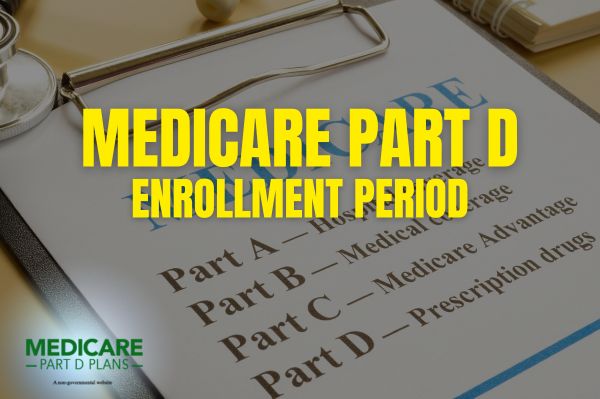
The Medicare Part D enrollment period will likely be vital for obtaining prescription drug coverage. This period consists of several phases with specific dates for enrolling or modifying your Part D coverage, helping you avoid penalties or gaps in coverage.
The three main types of enrollment periods are the Initial Enrollment Period (IEP), Annual Open Enrollment Period, and Special Enrollment Periods (SEPs).
Each offers unique opportunities to enroll in or adjust your Medicare Part D plan, helping you make informed decisions about your prescription drug coverage.
Initial Enrollment Period (IEP)
The Initial Enrollment Period (IEP) is your first chance to enroll in Medicare Part D. This seven-month window starts three months before your 65th birthday, includes your birth month, and extends three months after. Enrolling during this period helps you avoid late penalties that can raise your monthly premiums.
Missing this window could lead to higher costs and limited coverage options, so planning and submitting your enrollment request on time is vital.
Annual Open Enrollment Period
The Annual Open Enrollment Period runs from October 15 to December 7 each year, allowing you to enroll in, switch, or drop your Part D plan.
This period lets you review and adjust your current prescription drug coverage to meet your needs for the following year, possibly helping you avoid unexpected out-of-pocket costs.
Special Enrollment Periods (SEPs)
Special Enrollment Periods (SEPs) allow you to enroll in Medicare Part D outside the regular windows if you experience qualifying events like relocating or losing existing health coverage, enabling you to adjust your prescription drug coverage accordingly.
Knowing about SEP may allow you to act when changes occur, possibly preventing gaps in coverage.
How to Prepare for the Medicare Part D Enrollment Period
Preparation will likely be essential for smooth Medicare Part D enrollment. Proactive steps like understanding your current coverage, identifying needed adjustments, and consulting with one of our licensed agents can help you avoid last-minute issues.
Consulting with one of our licensed agents can provide tailored advice and support, helping you navigate your options and choose the best Medicare Part D plan based on your prescription drug needs.
Review Current Prescription Drug Coverage
Reviewing your current prescription drug coverage will likely be the initial step in preparing for Medicare Part D enrollment. Knowing what your plan might cover and identifying possible gaps may help to streamline the application process.
Determine if your current plan meets your needs or if better options are available, especially if you have a Medicare Advantage plan or other creditable drug coverage.
Make a List of Medications
Creating a comprehensive list of your medications may also be essential for comparing them against different Part D plans’ formularies. Be sure to include the name, dosage, and frequency of each medication.
This could help you evaluate how well different plans might cover your drugs and possibly ensure you choose a plan that minimizes out-of-pocket costs.
Compare Part D Plans
Comparing different Part D plans will likely ensure you get the best coverage for your needs. Tools like the Plan Finder on this website help compare plans based on premiums, deductibles, and covered medications, enabling informed decisions.
When comparing plans, consider:
- Overall costs like premiums, deductibles, and out-of-pocket expenses
- Whether your preferred pharmacies might be in-network
- If the plan covers your medications
These various factors could help you find a plan that offers the best value and necessary coverage.
Avoiding Penalties During the Enrollment Period
Avoiding penalties during Medicare Part D enrollment is crucial for managing healthcare costs. Points to consider include:
- The late enrollment penalty may be incurred for not enrolling when first eligible.
- This penalty could significantly raise your monthly premiums.
- Timely enrollment and continuous coverage will likely be essential to avoid penalties.
Timely enrollment and documentation of any creditable prescription drug coverage could help you avoid penalties and cover prescription drugs. Proper preparation and awareness of the rules could potentially save money and ensure necessary coverage.
The Late Enrollment Penalty
The late enrollment penalty for Medicare Part D is 1% of the national base beneficiary premium for each month without creditable coverage, likely added to your monthly premium for the duration of your Part D coverage.
To avoid this penalty, enroll during your Initial Enrollment Period or maintain continuous creditable coverage.
Creditable Prescription Drug Coverage
Creditable prescription drug coverage will likely pay at least as much as Medicare’s standard prescription drug coverage. Having such coverage could help you avoid late enrollment penalties if you enroll in a Medicare Part D plan later.
Keep documentation of any creditable coverage to prove you had it when enrolling in Part D.
Keeping Documentation
Maintaining records of previous creditable drug coverage may be crucial for demonstrating eligibility and avoiding penalties when enrolling in Part D. These records might include documentation from your employer or other health plans confirming your coverage was creditable.
Keeping these documents safe will likely ensure you can provide proof if needed, preventing penalties.
Switching Medicare Part D Plans
Switching Medicare Part D plans may improve your drug coverage or possibly reduce costs. Possible reasons for switching might include:
- Changes in medication needs
- Increased costs
- Dissatisfaction with customer service
When considering a switch, compare the potential benefits and costs against your current coverage. This could lead to better drug coverage and potential financial savings, ensuring you have the best plan for your needs.
Reasons to Switch Plans
Possible changes in medication requirements or increased costs might motivate individuals to switch their Medicare Part D plans. Other reasons might include better customer service or more comprehensive coverage.
Analyzing your existing drug coverage details may also reveal gaps or advantages that may influence your choice of Part D plan.
Steps to Switch Plans
To switch plans, call one of our licensed agents at 1-833-641-4938 (TTY 711), Mon-Fri 8 am-9 pm EST.
Enrolling in a new plan may automatically end your previous coverage when the new one starts, possibly ensuring a seamless transition.
What Happens After Switching Plans
After switching plans, you will likely receive new identification cards reflecting your updated coverage. The start date for the new plan typically aligns with the enrollment period, possibly ensuring no lapse in your prescription drug coverage.
Enrolling in a Medicare Advantage Plan with Drug Coverage
Some Medicare Advantage plans might combine health coverage with prescription drug benefits, possibly offering a comprehensive healthcare solution. These plans could potentially simplify managing both healthcare and prescriptions by providing a single plan that covers all your needs.
Understanding the various benefits and enrollment process will likely help you make an informed decision.
To enroll in a Medicare Advantage plan, you must have both Medicare Part A and Part B and live within the plan’s service area. Enrollment can be done during your Initial Enrollment Period, Annual Open Enrollment Period, or a Special Enrollment Period if you qualify.
Potential Benefits of Medicare Advantage Plans
Some Medicare Advantage plans might provide additional benefits that could go beyond prescription drug coverage, such as dental, vision, and hearing coverage, possibly offering a more comprehensive health care experience than Original Medicare.
See plans in your area instantly!
Advertisement
How to Enroll in a Medicare Advantage Plan
To enroll in a Medicare Advantage plan, individuals must have both Medicare Part A and Part B and live within the plan’s service area. Enrollment is possible during your Initial Enrollment Period, Annual Open Enrollment Period, or if you qualify for a Special Enrollment Period.
Select a plan that fits your needs and submit an enrollment request using this website or by calling the number on this website.
Comparing Medicare Advantage Plans
When comparing Medicare Advantage plans, be sure to evaluate the overall costs, such as premiums, deductibles, and out-of-pocket expenses. Consider the network of doctors and pharmacies, as well as any additional benefits.
Using tools like the Plan Finder on this website can help you compare these factors and choose the best plan for your needs.
Resources for Assistance with Medicare Part D Enrollment
Navigating Medicare Part D enrollment might be challenging, but numerous resources are available to assist you in understanding your options, comparing plans, or completing your enrollment.
Utilizing these tools could potentially ensure you have the information needed to make informed decisions about your prescription drug coverage.
Our licensed agents, this website, and State Health Insurance Assistance Programs (SHIP) are excellent starting points for guidance and support. These resources could help you navigate Medicare Part D enrollment and find the best plan for your needs.
Our Website
By entering your zip code into the Plan Finder Tool on this website, members can compare different Part D plans based on your specific needs.
The website can also provide comprehensive resources and guidance on how to enroll, what to consider when selecting a plan, and how to manage your Medicare coverage.
Licensed Agents
Our licensed agents play a crucial role in helping individuals enroll in Medicare Part D. They provide personalized assistance to help you understand differences between Part D plans and find the best coverage for your needs.
Local SHIP Counselors
State Health Insurance Assistance Programs (SHIP) offer free, unbiased counseling to help you navigate your Medicare options. SHIP counselors provide one-on-one assistance, ensuring you understand your choices and the enrollment process.
These services may be invaluable for anyone looking to make informed decisions about their Medicare Part D coverage without any cost or bias.
Find a Plan and Enroll Online Yourself!
Advertisement
Summary
Understanding the Medicare Part D enrollment periods, preparing adequately, and knowing how to avoid penalties will likely be essential steps in securing the best prescription drug coverage for your needs. By reviewing your current coverage, making a list of your medications, comparing plans, and utilizing available resources, you can navigate the enrollment process with confidence.
Whether you’re enrolling for the first time or considering switching plans, this article provides the information needed to make informed decisions and ensure seamless coverage. Remember, preparation and timely action may be key to optimizing your Medicare Part D benefits.
Frequently Asked Questions
When is the Initial Enrollment Period (IEP) for Medicare Part D?
The Initial Enrollment Period (IEP) for Medicare Part D spans seven months, beginning three months before your 65th birthday and concluding three months after your birth month. Ensure you enroll during this window to avoid any gaps in coverage.
What happens if I miss the Initial Enrollment Period?
If you miss the Initial Enrollment Period, you will likely face a late enrollment penalty that raises your monthly premiums. It’s crucial to enroll on time to help avoid these extra costs.
Can I change my Medicare Part D plan outside the Annual Open Enrollment Period?
You can change your Medicare Part D plan outside the Annual Open Enrollment Period if you experience qualifying events, like moving to a new service area or losing your current health coverage. It’s crucial to identify these events to take advantage of the Special Enrollment Period.
How can I avoid the late enrollment penalty for Medicare Part D?
To avoid the late enrollment penalty for Medicare Part D, enroll during your Initial Enrollment Period or maintain continuous creditable prescription drug coverage. This could potentially ensure you are protected from any penalties.
What resources are available to help me with Medicare Part D enrollment?
You can find valuable resources for Medicare Part D enrollment at this website, our licensed agents, and by contacting State Health Insurance Assistance Programs (SHIP). Utilizing these resources will help ensure you make informed choices.
Begin Choosing your plan
Advertisement
ZRN Health & Financial Services, LLC, a Texas limited liability company.