Find a Medicare Part D prescription drug plan

Medicare Part D
Prescription Drug Coverage 2026
Medicare Part D Explained
Medicare Part D could be essential for anyone on Medicare who needs prescription drug coverage. This article explains everything you need to know about Medicare Part D, from eligibility and enrollment periods to potential costs and coverage options.
Whether you’re new to Medicare or looking to change your plan, understanding Part D could save you money and possibly ensure you get the medications you need.
Key Takeaways
- Medicare Part D is a voluntary program that will likely offer prescription drug coverage to Medicare beneficiaries that could help manage medication costs.
- Enrollment in Medicare Part D occurs during specific periods: Initial Enrollment, Annual Open Enrollment, and Special Enrollment, with penalties for late registration.
In 2026 , potential changes to Medicare Part D might include a $2,000 out-of-pocket spending cap and the introduction of the Selected Drug Subsidy Program, which could improve access to medications.
Understanding Medicare Part D

Medicare Part D is a voluntary prescription drugs coverage that will likely be designed to assist Medicare beneficiaries with the costs of both brand-name and generic prescription drugs. Unlike other parts of Medicare, Part D is optional and will likely be provided by private insurance companies authorized by Medicare.
This flexibility might allow you to choose a plan that best fits your needs, whether through a stand-alone prescription drug plan or a Medicare Advantage plan with drug coverage.
Enrolling in Medicare Part D may be advisable even if you’re not currently taking prescription drugs because it could prepare you for any future needs and may help to avoid late enrollment penalties.
Medicare Part D plans, whether stand-alone or part of Medicare Advantage plans, will likely offer a range of options to suit different budgets and medical requirements.
Medicare Part D coverage may be available to individuals enrolled in Medicare Parts A or B. Whether you’re on traditional Medicare or a Medicare Advantage plan, you can enroll in a Part D plan for outpatient prescription drug coverage. This could potentially reduce your prescription drug costs and possibly ensure access to necessary medications.
For those new to Medicare, the choice between a stand-alone Medicare Part D plan and a Medicare Advantage plan with drug coverage might be confusing. However, understanding that both options aim to provide comprehensive drug coverage could make the decision-making process easier.
Always check the plan’s formulary to ensure your medications may be covered and compare costs to find the best fit for your situation.
Eligibility for Medicare Part D
Eligibility for Medicare Part D will likely extend to most Medicare beneficiaries, including those enrolled in Medicare Parts A or B. Generally, individuals qualify for Medicare when they turn 65.
However, those under 65 may also qualify due to disabilities if they have received Social Security Disability for at least 24 months or have specific conditions like End-Stage Renal Disease or ALS.
For individuals with End-Stage Renal Disease, Medicare eligibility begins approximately three months after regular dialysis starts or after a kidney transplant. Those diagnosed with ALS may also access Medicare benefits immediately upon receiving Social Security Disability benefits, without a waiting period.
This likely ensures that a broad range of individuals could potentially benefit from Medicare prescription drug coverage, likely providing essential support for managing prescription drug costs.
Enrollment Periods for Medicare Part D
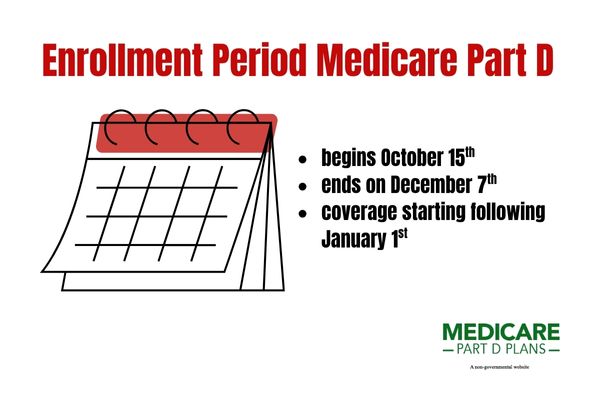
Enrollment periods for Medicare Part D are crucial for ensuring you get the coverage you need without facing late enrollment penalties. You can sign up during your Initial Enrollment Period, the Annual Open Enrollment Period, or if you qualify for a Special Enrollment Period.
Each period has specific rules and timelines, which are detailed in the following subsections.
Initial Enrollment Period
The Initial Enrollment Period for Medicare Part D is a seven-month window that starts three months before you turn 65, includes your birthday month, and extends three months after. This period offers flexibility, allowing you to choose a plan that fits your needs without rushing.
For those whose birthdays fall on the first of the month, the enrollment window shifts slightly, starting four months before and ending two months after the birthday month.
Special Enrollment Periods
Special Enrollment Periods (SEPs) provide a safety net for those who miss their Initial Enrollment Period. These periods are triggered by specific life events, such as losing creditable coverage from an employer or moving out of your plan’s service area.
Typically, SEPs last for two months following the triggering event, giving you ample time to enroll in a Medicare Part D plan without facing a late enrollment penalty.
Creditable coverage through an employer or union may also allow you to delay enrolling in Medicare Part D without penalties, which could be beneficial if you don’t need immediate prescription drug coverage but want to avoid future penalties. Enrolling during a Special Enrollment Period could potentially ensure continuous coverage and financial protection.
Open Enrollment Period
The Annual Open Enrollment Period for Medicare Part D runs from October 15 to December 7 each year. During this time, you can change your Medicare coverage, including switching or enrolling in Part D plans.
Reviewing your current plan and comparing it with other available options can help you ensure your prescription needs are met for the upcoming year.
Potential Costs Associated with Medicare Part D
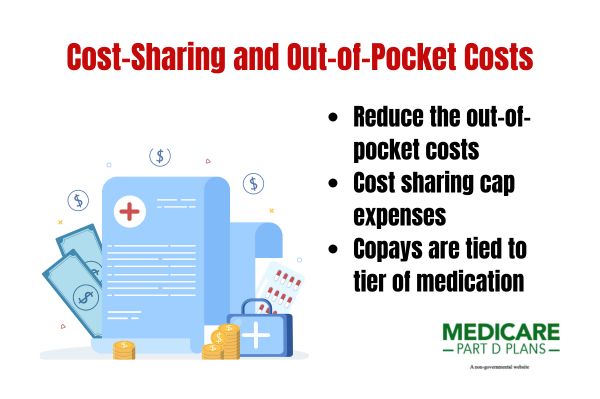
Knowing the potential costs associated with Medicare Part D could help manage your budget. These costs might include:
- Premiums
- Deductibles
- Copayments
- Coinsurance
Each of these components may vary significantly depending on the plan you choose the pharmacy you use, and the medications you need.
Monthly Premiums
Monthly premiums for Medicare Part D plans may vary widely. For instance:
- The average premium is projected to be approximately $46.50.
- Some plans may offer premiums as low as $0.
- The base beneficiary premium will likely be set at $36.78.
- Your monthly premium amount may depend on the specific plan you choose.
- Income level might influence your premium, as higher-income enrollees may be required to pay a larger portion of their Part D costs.
This variation will likely allow beneficiaries to select plans that best fit their financial situations while ensuring they have access to necessary medications.
Annual Deductible
The annual deductible could be another critical cost component of Medicare Part D.
The deductible might vary by plan, so it’s essential to compare options carefully to find one that aligns with your budget.
Copayments and Coinsurance
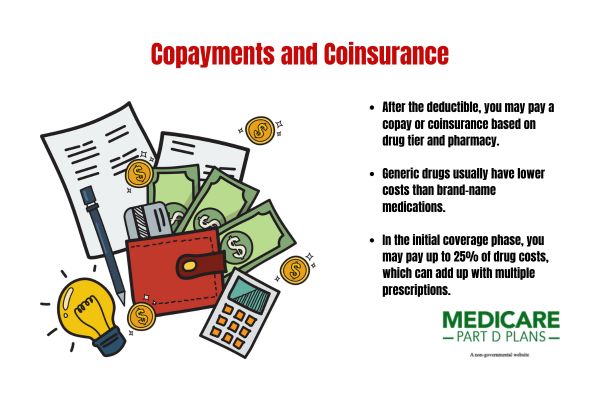
Copayments and coinsurance are the costs you pay for your medications after meeting your deductible. These amounts will likely be determined by the negotiated prices set by the insurance plans and may vary based on the specific drugs and the plan’s formulary.
In the initial coverage phase, beneficiaries might share cost sharing amounts with their plan, paying either a copayment or coinsurance, which could help manage out-of-pocket spending.
Phases of Medicare Part D Coverage
Medicare Part D coverage is structured into three distinct phases: the Deductible Phase, the Initial Coverage Phase, and the Catastrophic Coverage Phase. Each phase has different cost-sharing arrangements, which might affect how much you pay out of pocket for your medications.
Knowing these three phases could help manage your prescription drug costs throughout the year.
Deductible Phase
During the Deductible Phase, you may be responsible for paying up to 100% of your prescription drug costs until you reach your plan’s deductible amount. This phase is the initial stage of Medicare Part D coverage and may be reset at the beginning of each plan year.
Initial Coverage Phase
Once you meet your deductible, you enter the Initial Coverage Phase. In this phase:
- You may pay copayments or coinsurance for your prescriptions.
- The plan will likely cover the remaining costs.
- Typically, enrollees may pay up to a 25% coinsurance for covered Part D drugs during this phase.
The initial coverage phase will likely continue until your total drug costs reach $2,000.
Catastrophic Coverage Phase
After reaching $2,000 in out-of-pocket costs, you transition into the Catastrophic Coverage Phase. In this phase, your out-of-pocket costs may drop significantly.
Beneficiaries might not incur cost for covered drugs, while sponsors may cover about 60% of the costs. This phase could provide substantial financial relief for those with high medication expenses.
Starting in 2025, the coverage gap phase, often referred to as the “donut hole,” will be eliminated. This change could potentially simplify the cost structure and ensure that beneficiaries could move directly from the initial coverage phase to the catastrophic phase without facing a gap in coverage.
What Drugs Are Covered by Medicare Part D?
Medicare Part D will likely cover a wide range of medications, such as drugs for chronic illnesses and certain protected classes like cancer and HIV/AIDS. However, Medicare drug coverage specifics may vary by plan, such as requirements such as prior authorization, quantity limits, or testing of lower-cost alternatives.
Evaluating your current and anticipated medication needs likely ensures you have the necessary coverage when selecting a plan.
Formularies and Tiers
A formulary is a list of covered drugs by a Medicare Part D plan. Medicare Part D plans must meet federal government standards for formularies, which include covering at least two distinct drugs in each category.
Drugs are categorized into tiers, with lower tiers typically costing less than higher tiers. Understanding your plan’s formulary and the cost associated with each tier may help manage your prescription drug costs effectively.
Checking Drug Coverage
To verify if a specific drug is covered, consult the formulary of your Medicare Part D plan. If a necessary drug is not covered, you should request an exception to have it included in your coverage.
Using resources like Plan Finder Tool on this website can help you compare plans and ensure your medications are covered.
Financial Assistance Programs
Several financial assistance programs may be available to help low-income individuals manage their Medicare Part D expenses. These programs will likely aim to make medications more affordable and possibly ensure that financial limitations do not impede access to necessary treatments.
Low-Income Subsidy Program
The Low-Income Subsidy (LIS) program could potentially help eligible individuals reduce their Part D premiums and cost-sharing. This program, also known as “Extra Help,” might lower certain out-of-pocket expenses, such as premiums and deductibles, possibly making it easier for low-income beneficiaries to afford their medications.
Eligibility will likely be determined by income and asset limits set annually.
Extra Help Program
The Extra Help program may be specifically designed to aid those in need of financial assistance with their Medicare Part D costs. Application for the program may be made at any time, even if the individual has not yet enrolled in Part D.
See plans in your area instantly!
Advertisement
Possible Changes to Medicare Part D in 2026
Significant changes may be coming to Medicare Part D
These updates could help you plan and make informed decisions about your private plans cover coverage.
Out-of-Pocket Threshold
Starting
Beneficiaries may continue to pay up to 25% of their gross drug costs until reaching this cap, after which they may no longer have to worry about additional out-of-pocket spending for the year.
Selected Drug Subsidy Program
The Selected Drug Subsidy Program, set to begin
This initiative will likely aim to make expensive medications more affordable and accessible to those who need them the most.
Avoiding Late Enrollment Penalties
Avoiding late enrollment penalties could be crucial for maintaining affordable Medicare Part D coverage. Here’s how to avoid the penalty:
- The penalty is calculated as 1% of the average premium for each month you were without creditable coverage.
- Enroll during your Initial Enrollment Period.
- If you lose creditable coverage, enroll during a Special Enrollment Period.
Qualifying for the Part D Low-Income Subsidy may also help you avoid paying these penalties.
Tips for Choosing the Right Medicare Part D Plan
Choosing the right Medicare Part D plan will likely require careful consideration of your current and future medication needs. Start by:
- Identifying all the medications you currently take, including dosages and frequency of use.
- Considering any future medications you may need for chronic conditions.
- Reviewing the formularies of different plans to ensure your medications might be covered.
- Checking for any restrictions or tier placements that could affect your out-of-pocket costs.
Additionally, when evaluating insurance plans, consider the following:
- Monthly premiums
- Deductibles
- Copayments
- Coinsurance
- Plan premium
Determine how these costs might fit into your budget and compare the overall value of each plan. Utilizing tools like the Plan Finder Tool on this website can help you compare plans and select the one that best meets your needs.
Find a Plan and Enroll Online Yourself!
Advertisement
Summary
Navigating Medicare Part D might initially seem daunting, but understanding its various aspects could you to make informed decisions about your health coverage. From eligibility and enrollment periods to potential costs and phases of coverage, each component will likely play a crucial role in ensuring you have access to necessary medications without breaking the bank.
Remember to review your plan annually, especially during the Open Enrollment Period, to ensure it continues to meet your needs. With the right information and resources, you can confidently manage your Medicare Part D coverage and focus on what matters most—your health.
Frequently Asked Questions
What is the annual deductible for the defined standard benefit in CY 2026 ?
The annual deductible for the defined standard benefit in CY
What percentage of coinsurance will the enrollee pay for covered Part D drugs in the initial coverage phase?
The enrollee may pay up to 25% coinsurance for covered Part D drugs during the initial coverage phase.
What is the cost-sharing arrangement for the catastrophic phase of the Part D benefit?
In the catastrophic phase of the Part D benefit, enrollees might not pay cost-sharing for covered drugs, while sponsors may cover about 60% of the costs.
How can I avoid the Medicare Part D late enrollment penalty?
To avoid the Medicare Part D late enrollment penalty, enroll during your Initial Enrollment Period or a Special Enrollment Period if you lose creditable coverage. Additionally, qualifying for the Part D Low-Income Subsidy may further prevent penalties.
What resources are available for comparing Medicare Part D plans?
Utilize the Plan Finder Tool on this website to effectively compare Medicare Part D plans in your area. This resource provides valuable insights to help you make informed decisions.
Begin Choosing your plan
Advertisement
ZRN Health & Financial Services, LLC, a Texas limited liability company.