Find a Medicare Part D prescription drug plan

Medicare Part D
Prescription Drug Coverage 2026
Medicare Part D Plan
Medicare Part D Plan may help cover your prescription drug costs. Learn how it works, the possible costs, and how to pick the best plan.
Key Takeaways
- Medicare Part D will likely offer essential prescription drug coverage for all Medicare beneficiaries, either through standalone plans or integrated into Medicare Advantage plans.
- Understanding the three phases of coverage—Annual Deductible, Initial Coverage, and Catastrophic Coverage—may be crucial for managing out-of-pocket costs throughout the year.
- Enrollment in Medicare Part D during designated periods could be vital to avoid late penalties, and financial assistance programs like Extra Help may significantly reduce costs for eligible beneficiaries.
Overview of Medicare Part D
Medicare Part D is a voluntary Part D prescription drug benefit that could help Medicare recipients manage medication costs. By covering outpatient prescription drugs, it will likely play a crucial role in comprehensive healthcare coverage and could potentially ensure affordability for necessary medications.
Additionally, the Medicare Part D prescription plan may be essential for many beneficiaries.
All individuals eligible for Medicare may also receive Medicare Part D, likely providing a wide safety net for those needing prescription drug coverage.
Beneficiaries may obtain coverage either through a standalone Part D plan or a Medicare Advantage plan that might include drug coverage, possibly allowing them to choose what best suits their healthcare needs and financial situation.
Medicare Part D is optional, but enrolling could potentially lead to significant savings on prescription drug costs. Private insurance companies approved by Medicare will likely provide this coverage, likely offering a variety of plans and options to meet beneficiaries’ needs.
How Medicare Part D Plans Work
Private health insurance company plans will likely sell Medicare Part D plans, each with different formularies that determine covered drugs. These plans may vary in pharmacy networks and costs, making it essential to reassess your plan regularly. Annual changes in coverage and pricing might mean that a plan suitable one year might not be the best option the next.
When choosing a Medicare Part D plan, consider the plan’s formulary (list of covered drugs) and its network pharmacies. Understanding these elements could help avoid unexpected expenses and possibly ensure access to necessary medications.
Coverage Phases in Medicare Part D
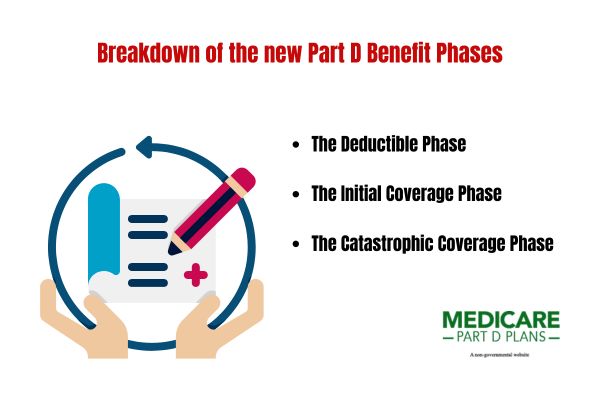
Medicare Part D includes three phases of coverage to manage prescription drug costs: the Annual Deductible phase, the Initial Coverage phase, and the Catastrophic Coverage phase. Each phase has different cost-sharing requirements, which may affect your out-of-pocket expenses throughout the year.
During the Annual Deductible phase, beneficiaries may pay the full cost of their prescription drugs until reaching the annual deductible amount, capped at $590 for 2026. Once met, you move into the Initial Coverage phase.
In the Initial Coverage phase, beneficiaries may pay up to 25% coinsurance for covered Part D drugs while the plan will likely cover the remaining 75%. This phase will likely continue until total drug costs reach a specific threshold.
When out-of-pocket spending hits $2,000, you enter the Catastrophic Coverage phase, where cost-sharing might not be required for covered drugs for the rest of the year.
Formulary and Covered Prescription Drugs
A formulary is a drug list of covered drugs offered by each Medicare Part D plan, including both brand-name and generic medications. Plans should cover a broad range of drug classes to help ensure comprehensive treatment options, whether for chronic conditions or short-term treatment.
Ensure the medications you rely on might be included in your plan’s formulary to avoid paying full price for drugs covered not covered. Plans may also cover most drugs in specific protected classes, such as those for cancer and HIV/AIDS.
If a needed drug is not covered, you should request an exception, or your doctor may provide prior authorization to ensure coverage. Some plans may also require trying less expensive drugs before covering a more costly option.
Potential Costs Associated with Medicare Part D
Medicare Part D costs may vary widely based on the plan and your coverage phase. These might include:
- Monthly premiums
- Annual deductibles
- Copays
- Coinsurance
Beneficiaries may pay Part D premiums directly to the insurance plan premiums or have them deducted from Social Security Administration benefits.
High-income beneficiaries may also pay an extra amount known as the Income-Related Monthly Adjustment Amount (IRMAA), which could affect their monthly Part D premium, ranging from around $13.70 to $85.80 per month.
Comprehending these potential costs and their impact on your budget will likely be crucial for managing healthcare expenses effectively.
Monthly Premiums and Deductibles
The average monthly premium for Medicare Part D plans in 2026 may be set around $46.50, but the actual amount may range from $0 to over $100, depending on the plan and your income. The base beneficiary premium for 2026 is approximately $36.78.
Additionally, the maximum annual deductible for Medicare Part D is $590, the most you would pay out-of-pocket before your plan starts covering a portion of prescription drug costs.
Premiums and deductibles will likely be key factors to consider when selecting a plan, as they could directly impact out-of-pocket costs.
Copays and Coinsurance
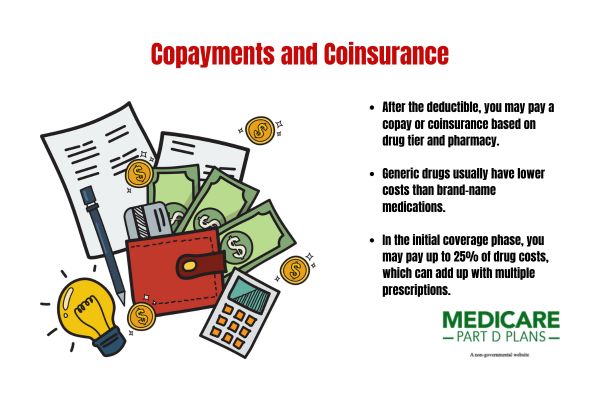
Medicare Part D plans categorize drugs into tiers, which may affect copays and coinsurance:
- Generic drugs might be on a lower tier with smaller copays.
- Brand-name drugs will likely be on higher tiers with larger copays. Pharmacy networks may also influence these costs.
- Using preferred pharmacies could potentially result in lower copayments.
Copays and coinsurance are cost-sharing types that you pay when accessing medications under Medicare Part D. Understanding these terms and their application to your plan could help manage prescription drug costs more effectively.
Saving on Prescription Drug Costs
Several strategies may help you save on prescription drug costs under Medicare Part D. Using generic medications, which may be cheaper than brand-name counterparts, might be one effective way. Additionally, mail-order pharmacies might offer lower prices for prescription drugs compared to local pharmacies.
Qualifying for the Extra Help program, which could offer financial assistance to low-income beneficiaries, could potentially reduce out-of-pocket costs for Medicare Part D, likely making essential medications more affordable.
The Impact of the Inflation Reduction Act on Medicare Part D
The Inflation Reduction Act will likely introduce changes to Medicare Part D to reduce costs and improve access to essential medications. Starting in 2025, a $2,000 cap on out-of-pocket drug spending for Medicare Part D members could significantly lower the financial burden.
The Act also establishes a $35 monthly cap on out-of-pocket costs for covered insulin for Medicare Part D members, likely offering substantial savings. Another change allows spreading out-of-pocket drug costs into monthly payments throughout the year, helping manage expenses more effectively.
From 2026, the Act may require that selected drugs with a maximum fair price be included in Medicare Part D formularies, possibly ensuring better access and affordability. These changes will likely aim to provide additional support for people with Medicare coverage, ensuring they could afford necessary medications.
See plans in your area instantly!
Advertisement
Enrollment in Medicare Part D
Enrolling in Medicare Part D may help to avoid higher premiums later on. Key points about enrollment include:
- Enrollment must occur during specific periods to avoid penalties.
- Special enrollment periods are available for certain circumstances.
- These special enrollment periods typically last two months.
- They allow individuals to enroll outside the initial or open enrollment periods.
Enrolling during these periods helps avoid late enrollment penalties added to the monthly premium and usually lasting for the duration of the individual’s coverage. Being aware of these enrollment periods will likely ensure continuous and affordable drug coverage.
Initial Enrollment Period
The initial enrollment period for Medicare Part D is a seven-month window starting three months before your 65th birthday and ending three months after. This period is crucial for new beneficiaries to enroll in a Medicare Part D plan without incurring penalties.
Special Enrollment Periods
Special enrollment periods allow individuals to enroll in Medicare Part D outside typical enrollment times. You may qualify for a special enrollment period if you lose employer-based prescription drug coverage, among other circumstances.
Enrolled during a special period could help you avoid the late enrollment penalty.
Late Enrollment Penalty
If you delay signing up for Medicare Part D without creditable coverage, you might incur a late enrollment penalty. This penalty is 1% of the national base beneficiary premium for each month without coverage and will likely be added to your monthly premium.
Avoiding this penalty could be crucial for managing your prescription drug costs.
Financial Assistance Programs for Medicare Part D
Financial assistance programs will likely be available to help with Medicare Part D costs. The Extra Help program, or low income subsidy program, could offer significant financial assistance to low-income beneficiaries and those with limited income.
To qualify, individuals must have an income of less than 150% of the federal poverty level and meet certain asset requirements.
Beneficiaries with an LIS may also receive substantial help with premiums and cost-sharing, possibly making prescription drug costs more affordable.
Applications for Extra Help may be submitted at any time, either before or after enrolling in Part D, and might require financial documents like bank statements and tax returns.
Choosing the Right Medicare Part D Plan
Choosing the right Medicare Part D plan will likely require careful consideration of personal medication needs, plan formularies, and pharmacy networks.
If a necessary drug is not listed in a plan’s formulary, you should request an exception for coverage. Comparing different plans may also help identify options with lower out-of-pocket costs in your prescription drug plan.
Evaluating customer service ratings of Part D plans could provide insights into the services quality you might expect. Ultimately, the right plan aligns with your individual needs and preferences.
Find a Plan and Enroll Online Yourself!
Advertisement
Summary
Understanding Medicare Part D is essential for managing your prescription drug costs and ensuring you have access to necessary medications. From understanding the different coverage phases and potential costs to knowing when and how to enroll, being informed will likely help you make the best decisions for your healthcare needs.
Taking the time to compare plans and consider how various factors, like formularies and pharmacy networks, could lead to significant savings and better coverage. Stay proactive, review your options annually, and choose the plan that best fits your needs. By doing so, you’ll likely be better prepared to manage your health and finances.
Frequently Asked Questions
What are the coverage phases in Medicare Part D?
Medicare Part D consists of three coverage phases: Annual Deductible, Initial Coverage, and Catastrophic Coverage, each with distinct cost-sharing requirements. Understanding these phases could be crucial for effective management of your prescription drug expenses.
How does the Inflation Reduction Act impact Medicare Part D?
The Inflation Reduction Act may significantly lower costs for Medicare Part D by introducing a $2,000 cap on out-of-pocket drug spending and capping insulin costs at $35 per month. These changes could greatly benefit beneficiaries by making essential medications more affordable.
What happens if I enroll in Medicare Part D late?
Enrolling in Medicare Part D late might result in a late enrollment penalty, which amounts to 1% of the national base beneficiary premium for each month you were without coverage. This penalty will likely be added to your monthly premium. It’s important to enroll on time to avoid this extra cost.
How could I save on prescription drug costs under Medicare Part D?
To save on prescription drug costs under Medicare Part D, consider using generic medications, utilizing mail-order pharmacies, and checking if you qualify for the Extra Help program. These strategies might lower your out-of-pocket expenses.
What assistance programs are available for Medicare Part D beneficiaries?
Medicare Part D beneficiaries may access the Extra Help program for financial assistance with premiums and cost-sharing, as well as various pharmaceutical company assistance programs. These resources could significantly alleviate the financial burden of prescription drug costs.
Begin Choosing your plan
Advertisement
ZRN Health & Financial Services, LLC, a Texas limited liability company.