Find a Medicare Part D prescription drug plan

Medicare Part D
Prescription Drug Coverage 2026
North Carolina Medicare Part D Plans
Curious about North Carolina Medicare Part D? This article will help you understand the different plans, enrollment requirements, possible costs, and more. Make informed choices about your prescription drug coverage with this comprehensive overview.
Key Takeaways
- Medicare Part D in North Carolina will likely provide crucial prescription drug coverage, allowing beneficiaries to access necessary medications without high costs.
- Eligibility requires enrollment in Medicare Part A and/or Part B, with specific enrollment periods to avoid late penalties and potentially ensure continuous coverage.
- Various Medicare Part D plans may be available, such as Standalone Prescription Drug Plans and Medicare Advantage Plans, each with different cost structures and coverage options.
Understanding Medicare Part D in North Carolina

Medicare Part D provides prescription drug coverage for those enrolled in Medicare. This may be particularly beneficial for individuals needing regular medications for chronic conditions or wanting to be prepared for unexpected health issues.
Without this coverage, prescription drug costs could become overwhelming, likely making this coverage a vital part of your healthcare plan.
When enrolling in Medicare Part D, evaluate your health status, medication needs, and financial situation to determine the best plan for you. Different plans might offer varying coverage levels, so understanding these nuances could help in choosing the plan that best suits your needs.
Medicare Part D will likely ensure beneficiaries can access necessary medications without prohibitive costs. Private insurance companies approved by Medicare will likely offer this coverage, possibly providing various options tailored to diverse needs.
Eligibility for Medicare Part D in North Carolina
Eligibility for Medicare Part D requires enrollment in Medicare Part A and/or Medicare Part B. It’s essential to enroll as soon as you’re eligible to avoid potential late enrollment penalties.
Delaying enrollment in Medicare Part D without other creditable prescription drug coverage may result in a late enrollment penalty if there’s a continuous period of 63 days or more without coverage. Special Enrollment Periods allow you to make changes to your drug plans due to specific life events, adapting your coverage to your needs.
If you receive Part B during the General Enrollment Period, you should enroll in a drug plan between April 1 and June 30, with coverage starting on July 1. This flexibility could help maintain continuous coverage and avoid penalties.
Enrollment Periods for Medicare Part D
Enrolling in a Medicare drug plan requires attention to specific enrollment periods. The Initial Enrollment Period, which aligns with your 65th birthday or your 25th month of receiving disability benefits, allows you to enroll without penalties.
The Annual Enrollment Period, from October 15 to December 7, allows you to review and change your Medicare prescription drug plans for the upcoming calendar year, ensuring your coverage continues to meet your needs.
Special Enrollment Periods enable changes in your Medicare Part D coverage under specific circumstances, like moving to a new address or losing other prescription drug coverage, likely providing flexibility to adapt your coverage to life changes.
Types of Medicare Part D Plans Available
Medicare Part D plans may come in two main types: Standalone Prescription Drug Plans (PDPs) and Medicare Advantage Plans that include drug coverage (MA-PDs). PDPs might add drug coverage to Original Medicare and certain other Medicare plans, which could offer flexibility for those who prefer separate health and drug coverage.
Certain MA-PDs, or Medicare Advantage Plans with Medicare drug coverage, will likely combine health and drug coverage in a single plan. Provided by private insurance companies approved by Medicare, these plans could offer a convenient, all-in-one solution for those who prefer integrated coverage.
When selecting a plan, check if your preferred pharmacies might be included in the network, as this could significantly impact your overall drug costs. Ensuring your pharmacy may be within the network may also help avoid unexpected expenses and make the most of your coverage.
Potential Costs Associated with Medicare Part D
Managing your budget effectively will likely require understanding the costs associated with Medicare Part D. Monthly premiums may vary and will likely be an additional cost to the Part B premium, so compare plans to find one that fits your financial situation.
Besides premiums, members should consider the yearly deductible, the amount you must pay before your drug plan starts contributing to costs. For CY
As of January 1, 2025, Medicare Part D eliminated the donut hole phase, which might increase out-of-pocket costs after a certain threshold. Transitioning to catastrophic coverage could potentially reduce your payment for drugs once out-of-pocket costs exceed a certain amount.
If your income exceeds $88,000 for individuals or $176,000 for couples, you may face an additional charge on top of your plan premium, known as Part D-IRMAA, which will likely be determined based on your income and may affect your overall costs.
Coverage Phases in Medicare Part D
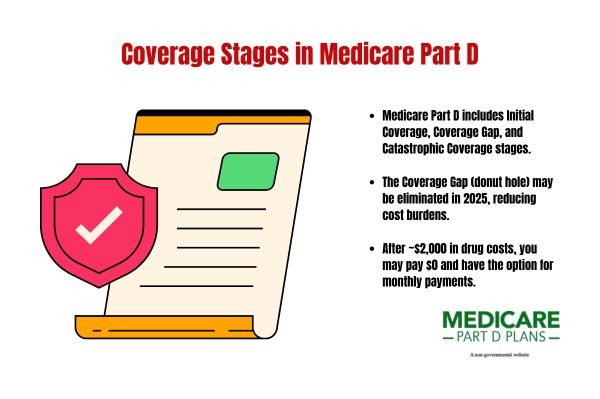
Medicare Part D coverage is divided into phases, each with its own cost structure. During the initial coverage phase:
- You might pay a copayment or coinsurance for medications.
- Your total costs will likely accumulate until they reach a certain threshold.
- Typically, you might pay up to 25% coinsurance for covered Part D drugs.
Once you reach the out-of-pocket cost threshold for the year, you enter the catastrophic coverage phase, which may reduce your payment for drugs. In this phase, you might not pay cost sharing for covered Part D drugs, which could offer substantial financial relief for those with high medication costs.
Transitioning from initial to catastrophic coverage stages may alleviate financial burdens, possibly ensuring beneficiaries could afford their medications without prohibitive costs.
The elimination of the donut hole phase may simplify the coverage structure and could potentially provide more predictable costs. This approach may also cover the needs of those requiring assistance.
Formulary and Drug Tiers
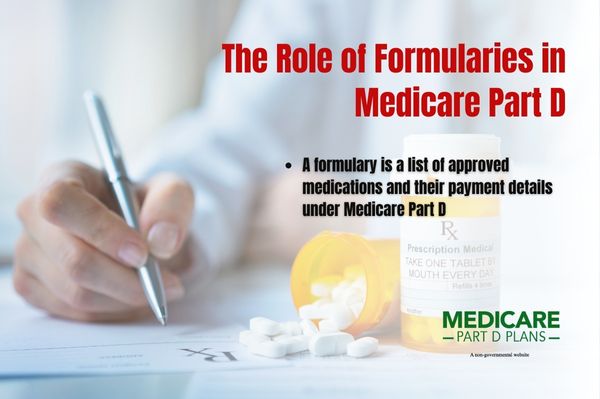
Each Medicare Part D plan includes a formulary, a drug list of covered prescription medications. Updated annually based on new drug approvals and safety information, it will likely ensure beneficiaries have access to the latest and most effective medications.
Review the Evidence of Coverage (EOC) and Annual Notice of Change (ANOC) documents for details about your plan’s coverage and any changes.
Medicare drug plans will likely categorize medications into tier levels that may affect copayment amounts. Lower tiers might include less expensive generic drugs, while higher tiers may include more expensive specialty drugs. Understanding these tiers might help to manage your out-of-pocket costs effectively, especially when it comes to paying for your medications.
Some covered drugs may also have additional restrictions like prior authorization, quantity limits, or step therapy requirements. If prescribed medication isn’t on the formulary, you should request an exception for coverage. Reviewing the formulary and understanding these various restrictions could help ensure you get the medications you need to cover your needs.
Low-Income Subsidy Programs in North Carolina
The Extra Help program could offer significant financial assistance with Medicare prescription drug costs for individuals with limited income. To qualify, a single person should have an annual income below $19,320 and resources under $13,290, while married couples may qualify with a combined income below $26,136 and resources under $26,520.
Individuals may automatically qualify for Extra Help if they have full Medicaid coverage or receive Supplemental Security Income (SSI). Those who qualify may pay as little as $3.40 for generic drugs and about $8.50 for brand-name drugs.
You may apply for Extra Help through the Social Security Administration or by contacting SHIIP for assistance.
See plans in your area instantly!
Advertisement
Choosing the Right Plan
Choosing the right Medicare drug plan will likely involve considering your health needs, financial situation, and the plan’s coverage options.
If you have a higher income, you may incur an additional charge on your Part D premium, known as Part D-IRMAA. Understanding how your income might affect costs could help in selecting a plan that fits your budget.
Our licensed agents can provide valuable guidance in selecting the right plan and understanding enrollment in the Medicare program. Utilizing local resources like SHIIP can also help tailor your services plan selection to your specific health and financial needs.
Reviewing the plan’s formulary and network of preferred pharmacies could potentially ensure they meet your requirements.
Resources for Assistance in North Carolina
The SHIIP program provides counselors in every county of North Carolina to assist with Medicare inquiries. Offering free, unbiased support, they do not sell insurance products or endorse any plans, ensuring you receive accurate and impartial advice tailored to your needs.
For assistance, individuals can reach SHIIP by calling their toll-free phone number at 1-855-408-1212. This service is invaluable for navigating the complexities of Medicare and making informed decisions about your coverage.
Find a Plan and Enroll Online Yourself!
Advertisement
Summary
Medicare Part D will likely be a critical component of managing healthcare costs, offering essential prescription drug coverage to beneficiaries. Understanding your eligibility, the types of plans available, and the potential costs involved may help you make informed decisions about your coverage.
With resources like SHIIP and the Extra Help program, North Carolina residents will likely have access to the support needed to navigate Medicare Part D confidently. Take the time to review your options and choose a plan that best meets your needs.
Frequently Asked Questions
What percentage of coinsurance might enrollees pay for covered Part D drugs during the initial coverage phase?
Enrollees may pay up to 25% coinsurance for covered Part D drugs during the initial coverage phase.
What is the catastrophic coverage cost sharing for enrollees in CY 2026 ?
In CY
What potential changes to the Part D benefit may be effective from January 1, 2026 ?
Beginning January 1,
How can you protect yourself from Medicare fraud?
To protect yourself from Medicare fraud, securely guard your Medicare card and avoid sharing your personal information with unknown individuals. Being cautious can significantly reduce your risk of falling victim to scams.
How can you receive important Medicare information faster?
You can receive important Medicare information faster by opting for electronic delivery of your “Medicare & You” handbook and Medicare Summary Notices (MSNs). This allows for quicker access to vital updates and documents.
Begin Choosing your plan
Advertisement
ZRN Health & Financial Services, LLC, a Texas limited liability company.